10 Leadership Lessons from 10 Years
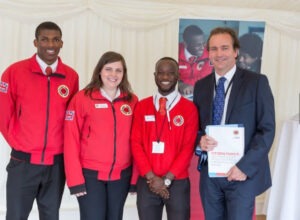
Christine Ellis, a former City Year mentor and staff member, reflects on the leadership journey that began during her service in the West Midlands in 2013–2014. Rising from mentor to Team Leader and later Impact Officer before moving on in 2017, Christine looks back on a decade of growth and shares the 10 key lessons she’s learned over 10 years.
10  Leadership Lessons from 10 Years
When I first led a team of volunteers at City Year UK, I thought leadership meant having all the answers. I believed my job was to know it all, to anticipate every challenge and to be the person others turned to for solutions.
Ten years later, after working across charities, higher education and the private sector, I’ve learned that true leadership isn’t about having all the answers, it’s about creating the conditions for others to thrive.
My current role as Operational Lead at Coventry Careers Hub, which combines student guidance with data analysis and partnership management, reinforces this principle on a daily basis. It has shown me that this approach applies not only to individuals, but also to the systems we design to support them.
Here are 10 lessons I’ve learned over the past decade that guide my approach to leadership today and will continue to shape how I lead in the future.
🤝1. Lead with Integrity
Integrity is more than honesty, it’s about having values as your compass.
At the Coventry Careers Hub, I often work with sensitive student data and employer partnerships. There’s always a temptation in large systems to focus on proving activity rather than creating impact. But the most trusted leaders don’t get distracted by being seen to be doing something. They prioritise values, impact and governance.
Integrity is what allows others, whether students, employers or senior colleagues, to know you’ll make decisions that protect their interests, not just your own.
Priorities can often be competing and influences vary, but when in doubt, I ask myself: does this decision reflect the values I want to stand for?
📖2. Encourage Transparency to Build Psychological Safety
Transparency encourages innovation in staff and honesty from staff and students.
As an Academic Advisor in New Zealand, I worked with PhD candidates who were often under immense pressure. Some felt isolated or anxious about whether they were ‘smart enough’ or ‘expert enough’ to be writing on their subject. Creating a space where they could admit those fears without judgment was only possible through transparency.
A framework I learned this year describes psychological safety as people feeling safe, seen, soothed, and secure. When colleagues and students experience that, they share the truth and only then is real change and therefore impact, possible.
Transparency isn’t about oversharing, it’s about creating spaces where people feel safe to be honest.
🚀3. Empower Your People to Empower Students
Delegation isn’t just about efficiency, it’s about trust.
At City Year UK, following my own year of volunteering, I line-managed a team of volunteers and designed their training programme. Rather than micromanaging delivery, I set direction, built parameters and gave them ownership of their school-based projects. That autonomy, supported by coaching and regular check-ins, accelerated their growth and alongside targeted employability support, contributed to their achieving progression in education or into work.
When leaders step back, staff step up. And when staff step up, students, service users and customers benefit.
Delegation isn’t offloading. It’s investing in the growth of your people, so they can deliver more than you ever could alone.
💡4. Unlock Potential with A Coaching Mindset
The most effective leaders don’t just give answers, they ask high quality questions.
At Go MAD Thinking, I coached new managers and early-career professionals. My training there taught me tools I still use today, approaches that help people move past barriers by finding their own solutions.
I’ve seen this work with both staff and students. A Careers Leader once told me they’d discovered the best solution for their school while answering my coaching questions. That moment confirmed what I already believed, which is that people often hold the answers, but need space to uncover them.
Coaching is essential because it builds confidence by showing people that they are capable of solving their own challenges.
⚡5. Think Influence Over Authority
In higher education, impact rarely comes from hierarchy. It comes from influence.
At the Coventry Careers Hub, I support schools and colleges to embed whole-school careers strategies. I don’t have direct authority over headteachers, but I do have data, credibility and strong relationships. Those tools allow me to influence systemic change that impacts thousands of students.
Leadership is about connecting people to a shared purpose, not issuing directives. Authority can compel compliance, but only influence can inspire the commitment that leads to lasting change.
💭6. Confront the Challenges, Champion the Solutions
Leaders don’t just react, they anticipate.
During a recent strategy day, our team used the VUCA model (Volatility, Uncertainty, Complexity, Ambiguity) to explore what might disrupt our work in the future. One theme was clear: change is coming. From organisation restructures to new policy and benchmarks. Instead of waiting for disruption, we started experimenting early with new approaches to employability and work experience.
That space to anticipate and test ideas meant we could learn lessons before the crisis arrived. Leaders carve out time to anticipate challenges, not just firefight the present.
📝7. Remember: Data Informs, People Decide
Data provides signals; people give them meaning.
In my role in the Hub, data highlight gaps in careers provision in schools and across the city. This is valuable information, but the real insight comes when I sit down with Careers Leaders and hear the stories behind the numbers. One school’s data might look strong, but a conversation reveals that disadvantaged students still feel excluded.
Data drives decisions, but people shape the strategy. I use data to spotlight problems but always validate with human experience before deciding solutions.
🔎8. Stay Curious
If we ask students to embrace lifelong learning, leaders must model it.
Over the past year, I made learning a non-negotiable. From evaluation techniques to new facilitation skills, I treated professional development as a core part of my role, not an optional extra. Each commitment provided something I could apply immediately, but the most valuable outcome wasn’t just the new skills; it was the dedicated time to reflect, a gift every leader needs.
Curiosity keeps leaders relevant, agile and humble enough to keep improving. I believe learning should be embedded in every job description, not seen as a bonus, but as a necessity.
🤹9. See Adaptability as a Superpower in a Shifting Landscape
Education and employment are constantly evolving, funding, demographics, hybrid delivery.
Having moved between countries and sectors, I’ve learned adaptability as a survival skill. Transitioning from the UK to New Zealand higher education required me to quickly understand new policies, systems and expectations. That adaptability not only made me more resilient, it helped me guide others through change with confidence.
Adaptability builds credibility and people trust leaders who stay calm and flexible through uncertainty.
🌱10. Build Resilience, Not Just CVs
A modern careers service must prepare students for uncertainty, not just CVs.
At City Year UK, I saw how supporting volunteers into employment required more than teaching interview skills. It meant building their confidence, resilience and ability to navigate setbacks.
The same is true for staff. Leaders must create cultures where people feel supported, workloads are realistic and recognition is given openly. When resilience is nurtured, people flourish.
CVs get people interviews, but resilience gets them through the unpredictable reality of careers.
Looking back, every lesson I’ve learned boils down to this: leadership isn’t about certainty, it’s about clarity and service.
It was City Year UK that first taught me that leadership is about service. That insight has shaped every role since, and it will continue to guide me into the next decade of my career.


Share This Story


Related stories
Thembeka’s journey with City Year UK has come full circle – from having a City Year mentor in secondary school,...
Read more about Standing Firm in Power and Pride – reflections from Thembeka Zwane2 of our Team Inspiration Mentors serving at Q3 Academy Langley have written individual testimonials about the positive change they’ve...
Read more about Team Inspirations’ testimonialsAhead of International Women’s Day, City Year UK alumni and GirlDreamer co-founder Amna writes about the formative experience of seeing...
Read more about Amna’s story: women in leadershipIsha is a City Year Mentor serving on Team Ubuntu, in the West Midlands, 2024-2025. “Hi, I’m Isha, and I...
Read more about “Working as a City Year Mentor is not just about making an impact on others — it’s also about growing as an individual.”